
Top Signs You Need Garage Door Service – Don’t Ignore These
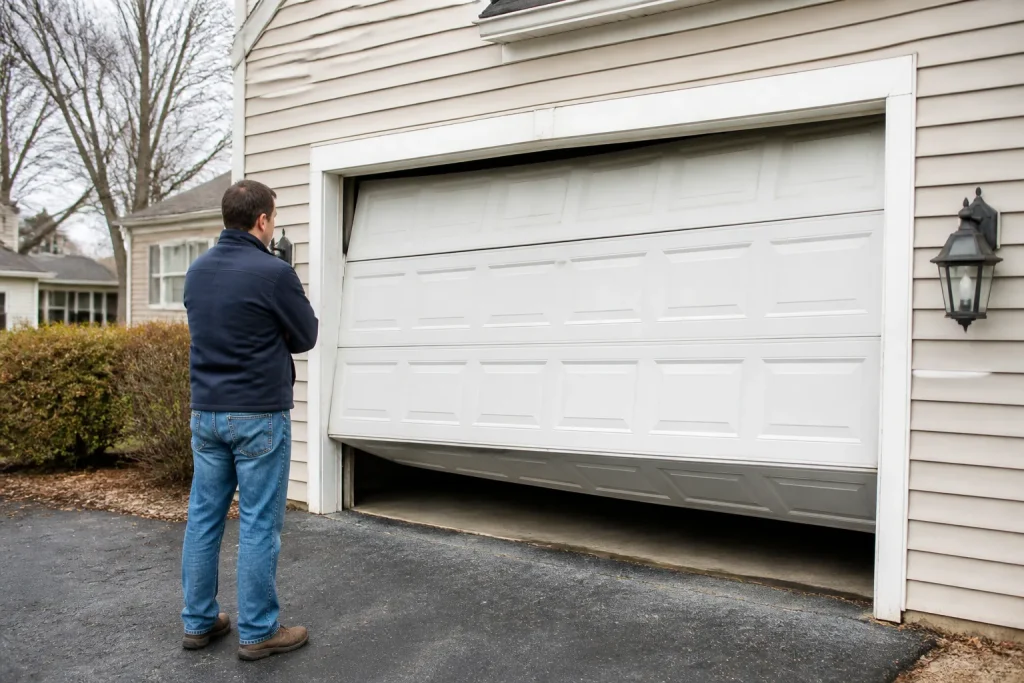
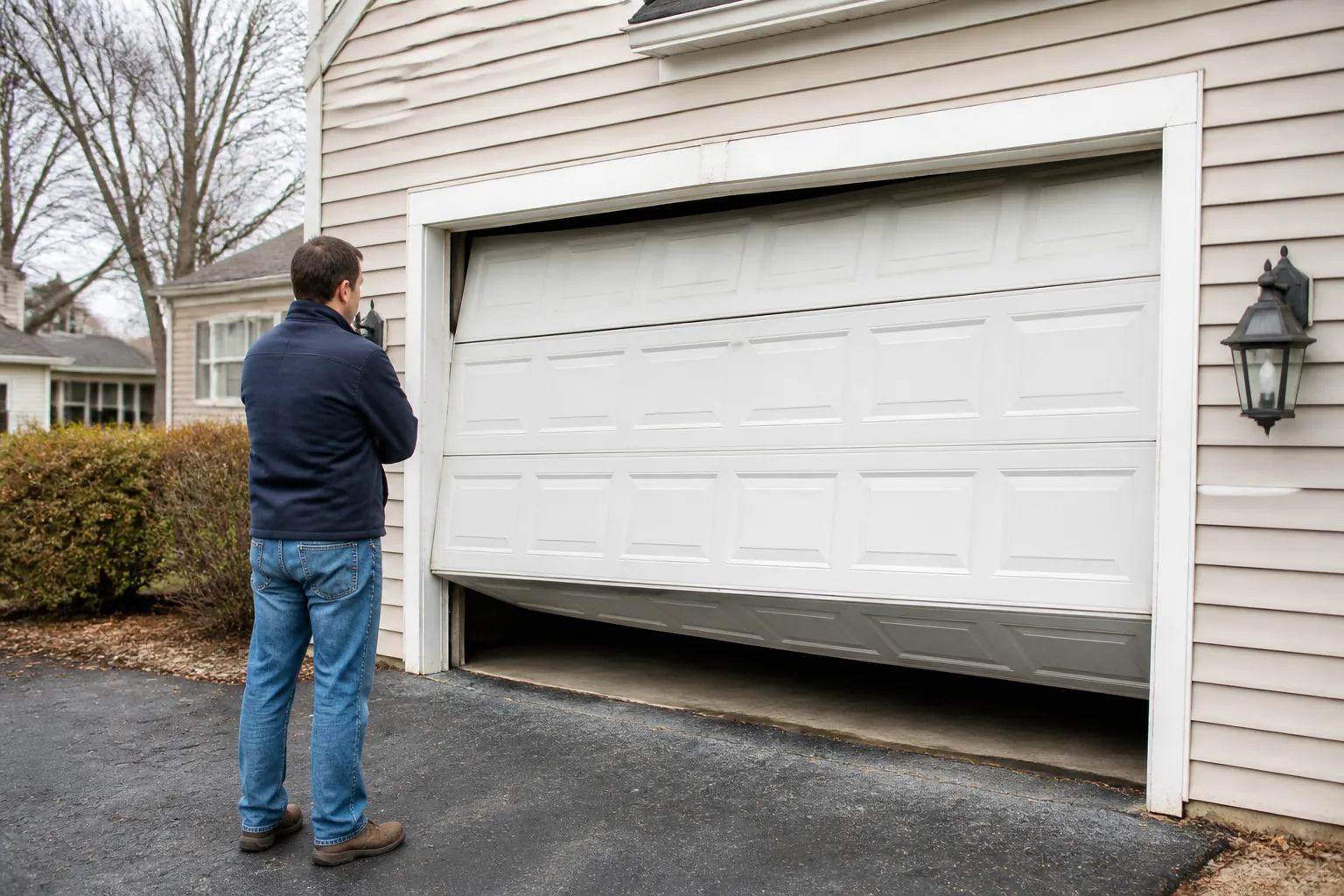
The clearest signs you need garage door service are a door that opens slower than it used to, grinding or popping sounds, a door that reverses before it closes, and visible wear on cables, rollers, or the bottom seal. None of these are cosmetic. Each one points to a specific part under stress, and catching them early usually keeps a small repair small. A garage door that takes two seconds longer to open than it did six months ago isn’t just slow – it’s telling you the spring tension is off, and the opener motor is compensating by overworking itself toward an early failure.
If you’d rather not climb a ladder to check any of this yourself, call (833) 508-9650 and we’ll take a look.
What does door speed drift tell you about spring health?
Door speed drift is the earliest warning most homeowners overlook, and it’s the one that matters most. When a torsion spring or extension spring loses tension, the opener has to lift more of the door’s weight on its own. The door gets heavier to the motor, so it opens a touch slower and the motor runs a touch longer. That extra strain is what shortens an opener’s life.
Here’s the five-minute test. Time a full open-to-close cycle with your phone stopwatch, write the number down, and repeat it once a month.
- A steady drift over weeks. A second or two slower per month means the spring is fatiguing. It’s the calm before a snap.
- Sluggish on cold mornings, normal by afternoon. Cold stiffens lubricant and contracts metal. Some of that is normal, but a door that’s noticeably stubborn on a frosty Haverhill morning is telling you the spring is near its limit.
- Opener straining or stalling mid-travel. The motor is fighting weight it was never sized to lift. That’s a spring problem showing up as an opener problem.
- A door that won’t stay up when you lift it by hand. If a properly balanced door should hold roughly halfway when you let go and it drops, the spring has lost its lift. Stop testing at that point.
This is also where we earn our keep. High-tension springs are the most dangerous part of any garage door, and adjusting or replacing one is a job for a trained technician, not a weekend project. If your timing test shows steady drift, that’s the moment a small adjustment can save you an emergency call later. Our garage door spring repair work is handled by technicians who do it routinely.
What do grinding, scraping, and popping sounds actually mean?
Every garage door makes some noise. The question is which noise, because the sound tells you which component is wearing out. In our experience, homeowners tend to lump all door noise together and ignore it until something breaks. Listen for these instead.
- Grinding or a metallic rumble. Usually worn rollers or dry, failing bearings. Rollers that have flat-spotted or lost their nylon surface drag instead of rolling. Left alone, that drag transfers stress to the opener.
- Scraping along one side. The door is rubbing the track. Either the track has been knocked out of alignment or a hinge is loose and pulling the panel sideways. Scraping also chews up the door’s finish and eventually the panel edge.
- A sharp pop or bang at the start of travel. Often a cable jumping its drum or a hinge under sudden load. Cables under tension can snap without warning, so a pop deserves a professional look before the next cycle.
- Creaking that gets worse in cold weather. Dry hinges and rollers. A little lubrication on the right parts helps, but persistent creaking can mean the hardware is loose.
- Squealing from the opener unit itself. A worn gear or a failing motor bearing inside the unit. That’s an opener issue, not a door issue, and it’s repairable more often than people expect.
Brand matters here. The tolerances and hardware on a Clopay door aren’t identical to a Wayne Dalton. We work on the brand already in your garage, so the diagnosis matches the actual system in front of us. A scraping Haverhill door in January is almost always a track or roller issue worth a quick look.
What should you look for in a five-minute visual inspection?
You can catch most failures before they happen with a flashlight and five minutes. Run this check in Haverhill a couple of times a year, and pay extra attention after a rough winter. Look, don’t touch anything under tension.
- Cables. Look at both sides where the cable winds. Frayed strands, kinks, or a cable sitting loosely off its drum all mean stop using the door. Cables are under extreme tension and are not a homeowner repair.
- Rollers. Worn rollers look flat, cracked, or wobbly in the track. If the roller has lost its rounded shape, it’s dragging.
- Bottom seal. A cracked, torn, or missing weather seal lets water and cold air under the door. In Massachusetts, that seal takes a beating from freeze-thaw cycles.
- Track alignment. Stand back and look for a bend or a gap between the track and the door. Tracks get knocked by a bumper or a bike and stay bent until someone straightens them.
- Hinges and hardware. Loose bolts, bent hinges, and rust spots on the metal. A quick tighten of visible bolts is fine; anything structural is a call to us.
If the list reads fine but the door still sounds unhappy, that’s the point to bring in a technician rather than guess. Our garage door repair visits start with a full inspection so you know what’s wearing and what isn’t.
Related services in Haverhill: if the noise traces back to the motor rather than the door, our garage door opener repair covers LiftMaster, Chamberlain, Genie, and Craftsman systems, and we diagnose before we recommend replacement.
Why does a door that reverses or won’t close all the way matter?
A door that reverses unexpectedly or stops short of closing is a safety system doing its job – or a safety system that’s failing. Either way, it’s not a reason to keep pressing the button. Modern openers use two protections: a pair of safety sensors near the floor that stop the door if something crosses the beam, and a force limit that reverses the door if it meets resistance.
- Reverses on its own near the floor. Usually dirty or misaligned safety sensors. The lenses get dusty and the beam breaks for no reason.
- Reverses partway up. Often a force-limit setting that’s too sensitive, or a door binding in the track. The opener thinks it hit an obstacle.
- Won’t close all the way. Could be a sensor knocked out of line, a track issue, or a limit switch inside the opener. Sometimes it’s as simple as something in the path of the beam.
The one thing to stop doing is repeated button presses. A door that reverses on a sensor glitch and then gets forced down is a real hazard. A door that would rather stay open than risk a child or a pet deserves a technician’s eyes, not a workaround. This is exactly the kind of call we treat as urgent in Haverhill, especially when the door won’t close and the house is left open.
How do Massachusetts winters affect your garage door?
Haverhill winters are hard on garage doors, and the wear patterns are specific. Freeze-thaw cycles are the main culprit: moisture works into the bottom seal and around the door frame, freezes, expands, then thaws, and slowly pulls things apart. That’s why the seal and the lower panels take the worst of it.
- Spring fatigue. Cold metal is less forgiving. A spring already near the end of its life tends to give out in the coldest stretch of the season. That’s why fall is the time to run the speed test.
- Seal cracking. Repeated freezing and thawing splits rubber and vinyl seals faster than in warmer climates. A failing seal lets cold air and meltwater in, which makes the next freeze worse.
- Track and hardware contraction. Metal shrinks in the cold, and loosened bolts can shift. A track that was true in October may be slightly off by February.
- Ice at the threshold. A door that meets a ridge of ice won’t close flush. Clear the threshold before assuming the opener is at fault.
A spring and fall check is the practical answer. In Haverhill, run the five-minute visual inspection when the leaves turn and again when the snow melts. If a spring does fail in the middle of a cold snap and the door is stuck open, that’s when emergency service earns its keep. We answer 24/7, and fast dispatch runs from 7am to 7pm.
When should you call a pro instead of checking it yourself?
Call a professional the moment a problem involves springs or cables. Those parts are under enough tension to injure someone badly, and no amount of online video changes that. Beyond that, call us when the door reverses on its own, when a cable looks frayed, when the door is visibly out of balance, or when the opener is straining to lift a door that used to glide.
There’s a second call-worthy moment: when repair stops making financial sense. A door that’s been patched at the hinges, the panels, and the seal may be ready for replacement, and the same technicians who diagnose the door can quote a new Clopay or Amarr door that fits the opening. That continuity matters in Haverhill, where an older door is often doing its job alongside a newer opener.
The honest rule of thumb: if a sign on this list involves tension, alignment, or the safety reverse, bring in a technician. If it’s a dirty sensor lens or a loose bolt, you’re fine to handle it.
The Bottom Line
The warning signs on your garage door are a diagnostic, not a scare tactic. Speed drift points to a tired spring. Grinding points to rollers. Scraping points to the track. A reversing door points to the safety system. Catch each one early and you’re looking at a small adjustment or a single part. Ignore them and the same problem grows into a second one, usually the opener carrying weight it was never meant to carry. Our technicians have up to 12 years of experience reading exactly these signals, and we work on the eight brands most homes actually have installed. If you’re in Haverhill and need help, Haverhill Garage Door Repair Co offers free estimates – call (833) 508-9650. We answer 24/7, and fast dispatch runs 7am to 7pm, Sunday through Friday.
Frequently Asked Questions
A door that opens more slowly than it did a few months ago is usually the first sign, and it points to a spring losing tension before it fails. Grinding and popping sounds come next. Time a full cycle with your phone and compare it month to month – steady drift is your cue to book a check.
No. Torsion and extension springs are under high tension and can cause serious injury if handled wrong. Adjusting or replacing one is a job for a trained technician, and that’s a hard line for us.
Yes. Freeze-thaw cycles crack bottom seals and shift tracks, and cold makes an aging spring more likely to snap. Run a spring and fall inspection in Haverhill and watch for stiffness on cold mornings.
Most often it’s dirty or misaligned safety sensors. If cleaning them doesn’t solve it, a technician should check the force limit and the track before you use the door again. Call (833) 508-9650 and we’ll sort out which it is – estimates are free.
Written by the team at Haverhill Garage Door Repair Co.
Need Garage Door Help?
Call Haverhill Garage Door Repair Co - the local pro we connect you with is licensed and insured, here with fast help in Haverhill.
(833) 508-9650